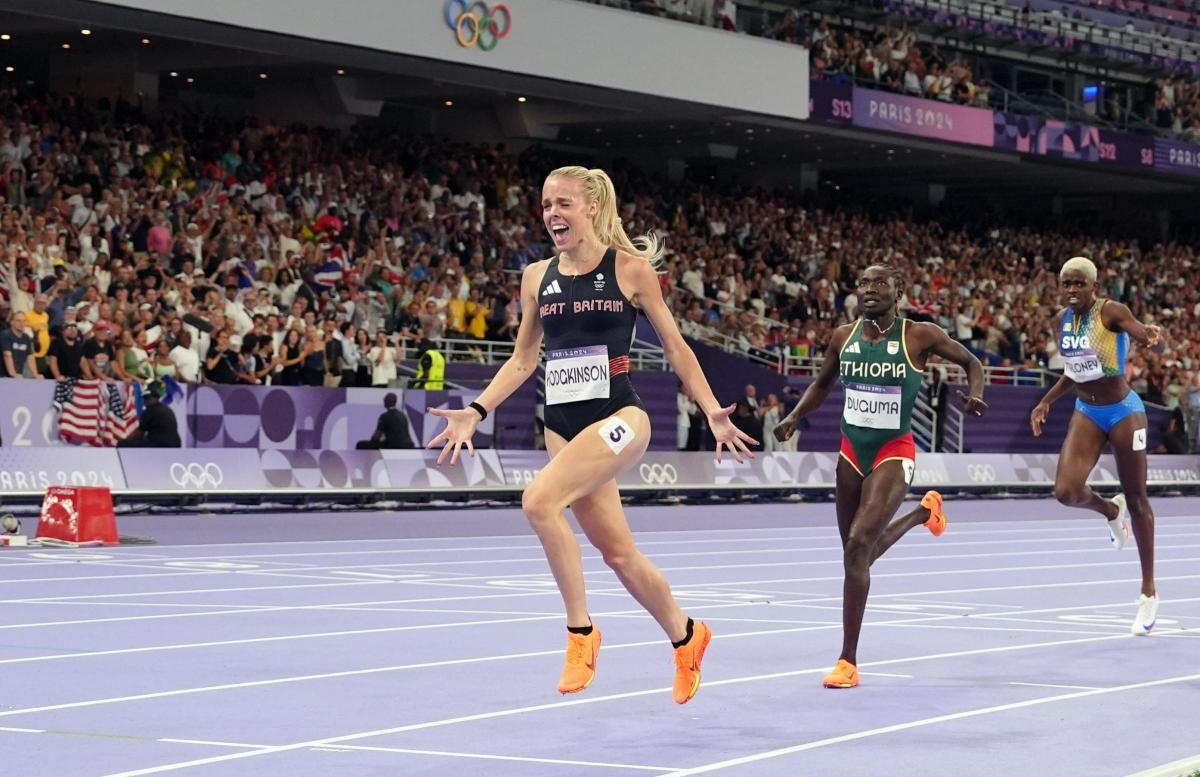
What a time to be a Leigh Harrier! The name of this modest North of England athletic club is to be found on many a lip across the globe. And, of course, this remarkable state of affairs is down to Keely Hodgkinson’s majestic victory in the Parisian Olympic Games 800 metres this very week. A member of the club from the age of nine with a real sense of its history, Keely , very much now UK Athletic’s ‘Golden Girl’, has brought the Harriers prominence and glory beyond our wildest dreams. I’ll say no more as articles and stories about her feats flood the media.
For example: https://www.leighjournal.co.uk/news/24500274.keely-hodgkinsons-ex-coach-celebrates-olympic-win-leigh-harriers/
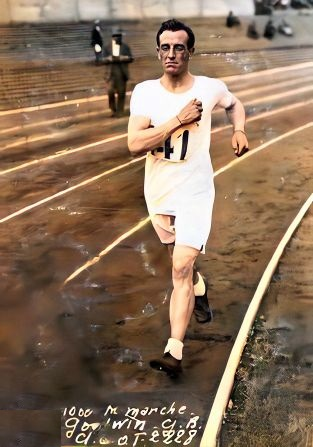
As it is, whatever Keely’s success, which seemed to be written in the stars, I had decided a month ago to draw attention to a fascinating coincidence. Exactly 100 years ago in the very same city, Paris, a Leigh Harrier, Reg Goodwin had taken the silver medal in the Olympic 10,000 metres track walk. In his magnificent labour of love, ‘A Pictorial History of Leigh Harriers AC’, John Taylor provides the following background and detail on Reg’s athletic career. I am profoundly grateful for his generous permission to use this material.


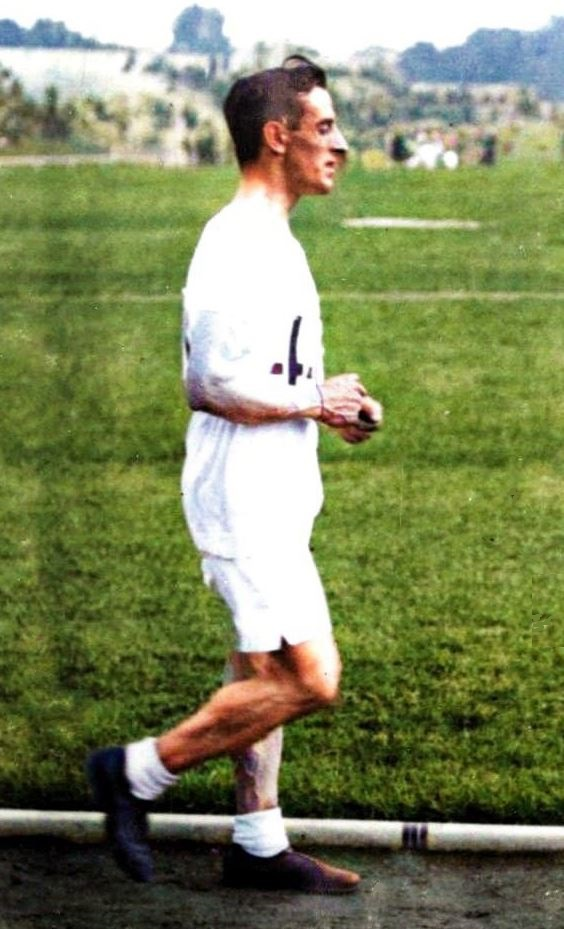
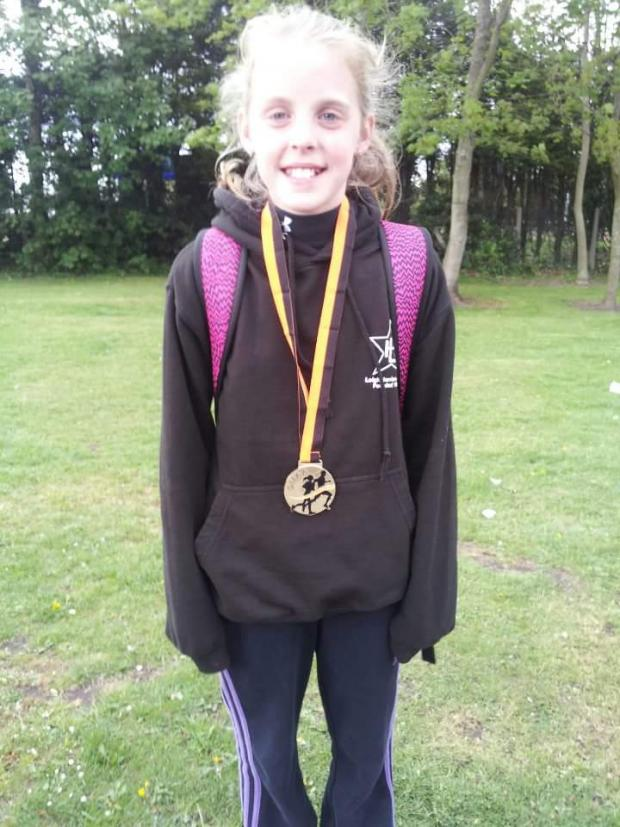
On a personal level my first memory of Reg is somewhat dim. My father Alf, a long-standing member of the Harriers and of Lancashire Walking Club, organised in 1953 a series of races for young athletes from the Hindley Green Labour Club, now demolished. I competed in the 6 – 8 years age group over three quarters of a mile, finishing third. However, unsurprisingly, seeing I was coached by my dad, I was awarded the style prize at the tender age of six. And the medal, which I still treasure, was presented by none other than Reg Goodwin himself. Of course I did not appreciate the honour until much later.
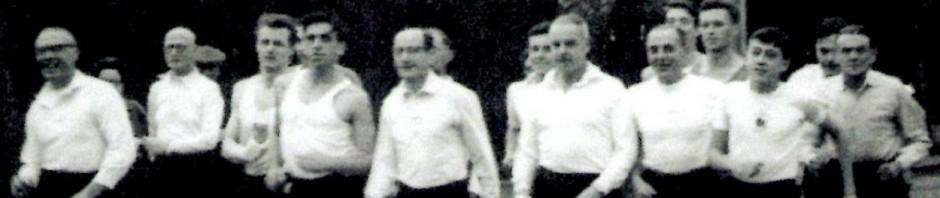
The realisation dawned through the 1950’s as Reg coached the up and coming talent and star of the Harriers walking section, Jack Sankey. Hence I was present sometimes at the training sessions which took place on the Holden Road cinder track. I remember participating in interval training on the back straight. Jack himself was widely regarded as an exceptionally fair stylist, upright and long-striding. The Harriers Club championships held traditionally in June included a One Mile Walk, which was not without its controversy. Jack’s main rival in the club was a well-built, rugby playing Brian Whitfield, whose short-striding mode of progression was in stark contrast to Jack’s almost military action. On at least one occasion Brian was disqualified dramatically in a sprint finish with Jack. As best I recollect Reg didn’t officiate as a judge because of his relationship with Jack. From those days I remember Reg as quietly spoken, encouraging and without any trace of self-importance.

By the time I was at my most serious in the late 60’s and early to mid-70’s, training regularly at the track Reg had disappeared from the scene. My father had died prematurely and this important relationship with Reg was lost. Amongst many regrets, being unable to fill many gaps in Reg’s biography, is the loss of almost all of the 20th century minutes and reports of the Lancashire Walking Club. Without doubt these would have shed further light on his major contribution as a Northern and National organiser. After all, such was his prestige he was appointed a judge at the 1948 London Olympics.

For myself I will always owe a debt of gratitude to Reg. His success as a race walker and his involvement across the decades with the Harriers meant that as a young lad I joined an athletics club, within which race walking was accepted and respected. I never felt the odd one out.
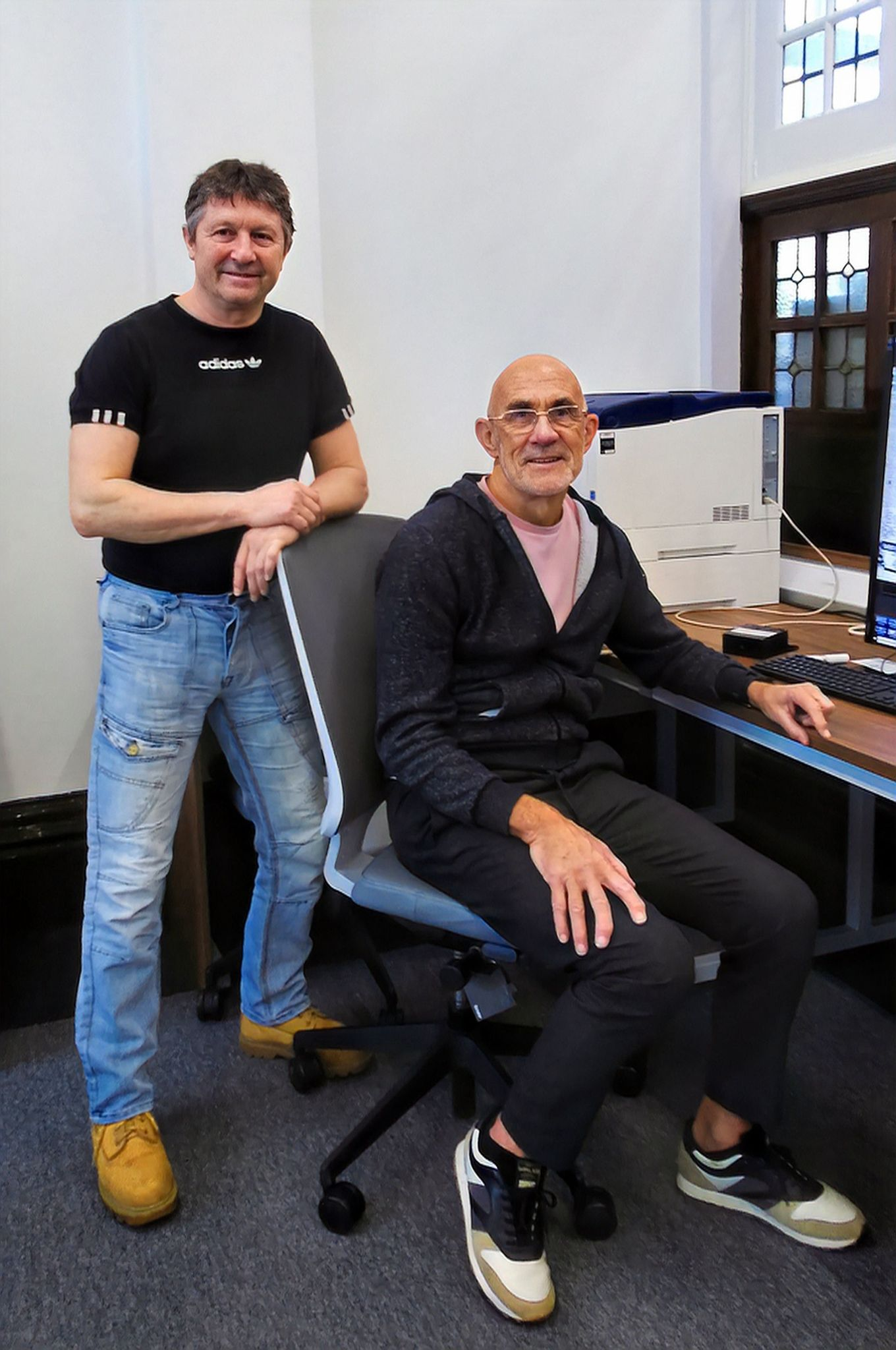
It is to John Taylor’s enormous credit that the tradition of race walking at the Leigh Harriers has been preserved through both his marvellous book and through the amazing club museum he curates, which is to be found in the club house at the Leigh Sports Village.
By twist of fate, too, this Saturday’s LWC club race in Chorley, August 10th is the Goodwin Cup 10 kilometres event. I’m sure all taking part in one way or another will take a moment to remember Reg’s exploits of a century ago.
Postscript
It would be remiss not to mention that the Harriers boasted a second representative in the GB team at the 1924 Olympics, namely Arthur Farrimond in the marathon. Despite a twisted ankle Arthur finished a creditable seventeenth out of fifty eight starters


 Lancashire Walking Club : Health The First Wealth
Thanks Tony. Another Great Article on Reg Goodwin and his truly outstanding career in Race Walking Internationally and for Leigh Harriers. How about having an event in the forseeable future in his memory and inviting Gold Medallist Keely Hodgkinson along. That would be a real plus to revive Race Walking in the North and beyond. I’m sure she would support such a venture. Yours in Sport and Friendship, Bill and Kath Sutherland
Hi Tony, Thanks for the article on Reg Goodwin and Leigh Harriers. I have just had a look at the present ground, which looks fabulous, compared to the cinder track I remember, when race walks were held from there. Keep up thr good work. David Lamb
Splendid post Tony.
By way of a footnote, my “first contact” with Lancashire Walking Club was one chilly day in February 1975 when I watched the Lancashire and Cheshire 15kms championships. It was held out of the Leigh Harriers ground, on the Charles Street circuit around Leigh Infirmary. The Club used the venue on very many occasions until the Harriers ground was sold off for building.
For the record, you won the Lancashire championship that day while in the Cheshire race, wasn’t Tony Malone second, behind Ken Harding?