A quick note to confirm that the Bury One Hour race will take place on Saturday, September 6th, starting at 1.00 p.m. The venue will be open from noon.
Bury Athletics Club, Market St, Bury BL9 9FX
As ever it would be very helpful if you could let Dave Evans know if you are attending and in what capacity – dave.evans08@hotmail.co.uk
Forgive the late notice and brevity but I seem to be on a merry-go-round of medical appointments following a somewhat melodramatic collapse at home a few weeks ago. At this moment no one can put their finger on the reason, despite all manner of tests. I don’t like to think so but perhaps it’s the village red!!
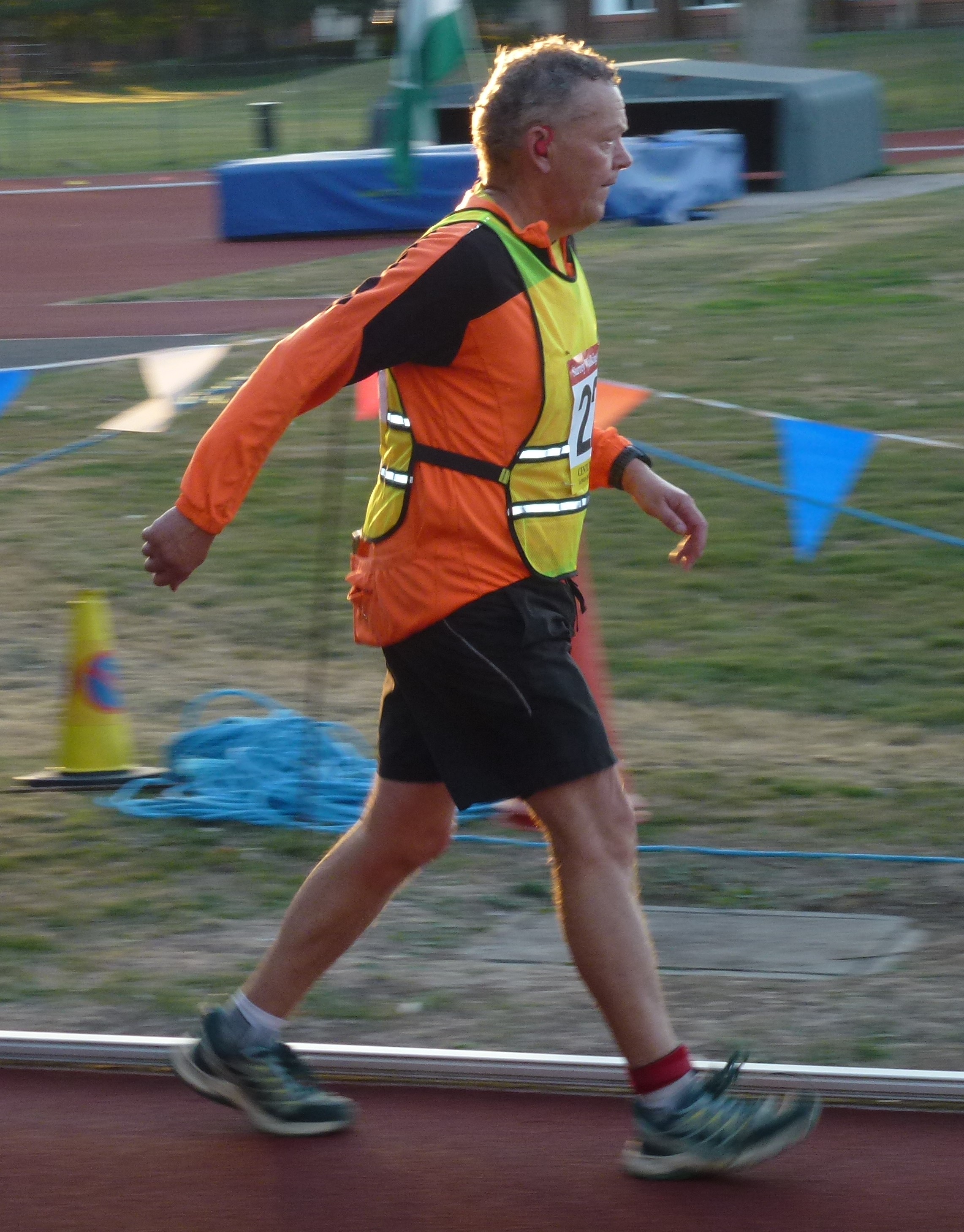
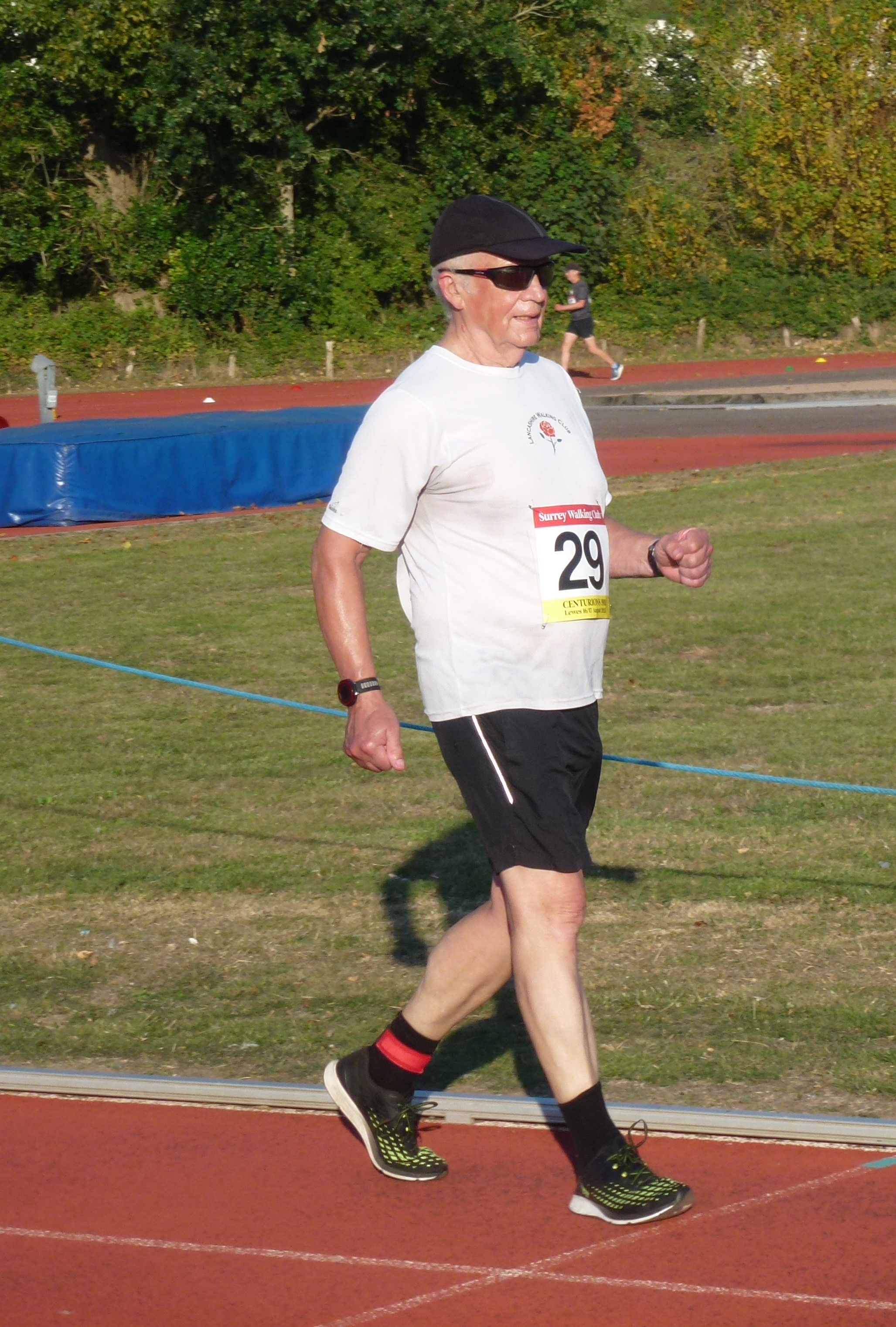
However to whet your appetite for a forthcoming Lancashire focus on the recent Hundred in Lewes, here are a couple of great photos taken by Greg Smith.
Martin Fisher striding outRoy ‘Shades’ Gunnett looking cool in the evening sunshine
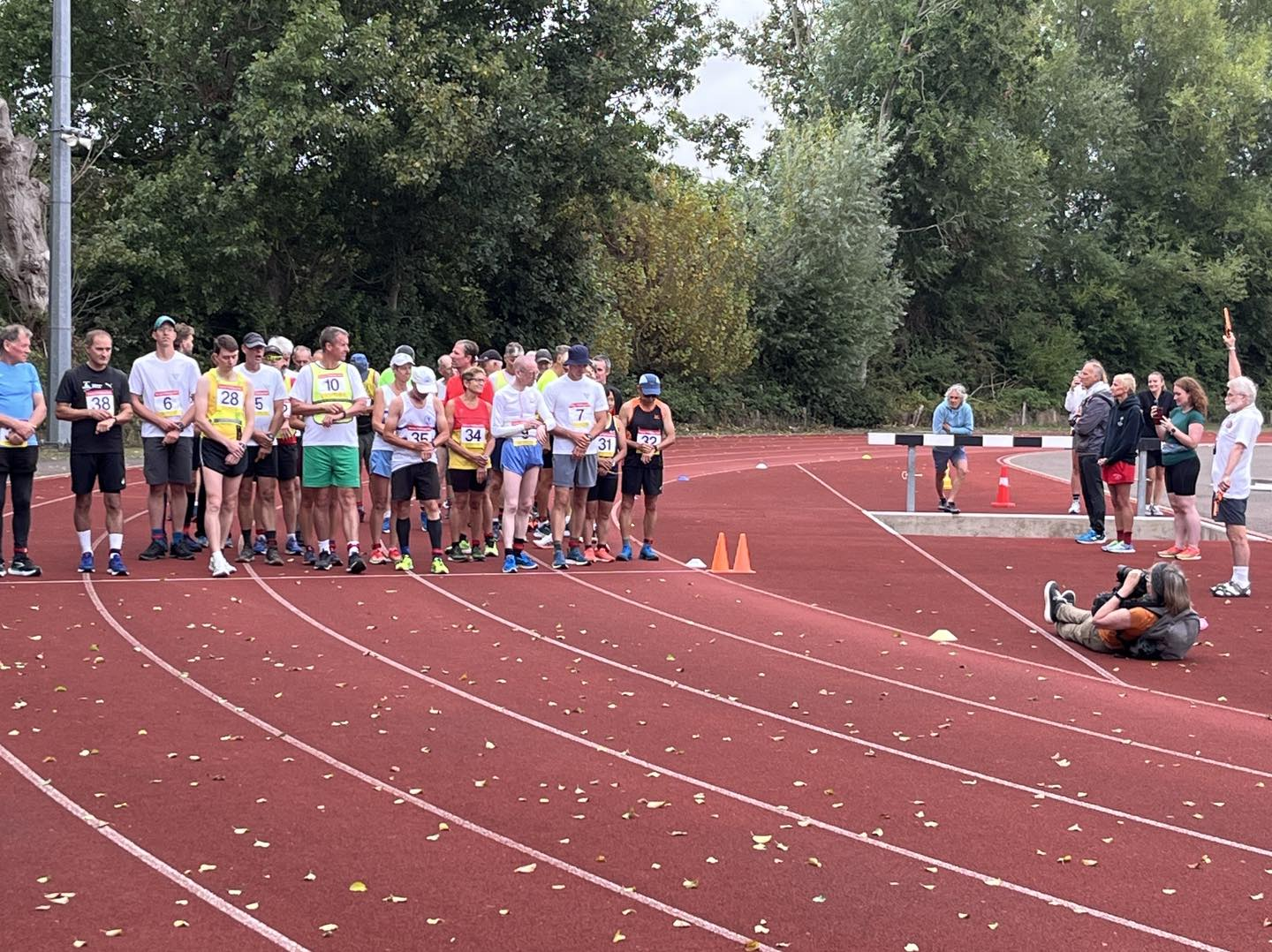
Roger Michell C724, Surrey WC takes charge, conveying pre-race instruction and firing the start in a traditional manner
Steve Kemp, C1075 reports:
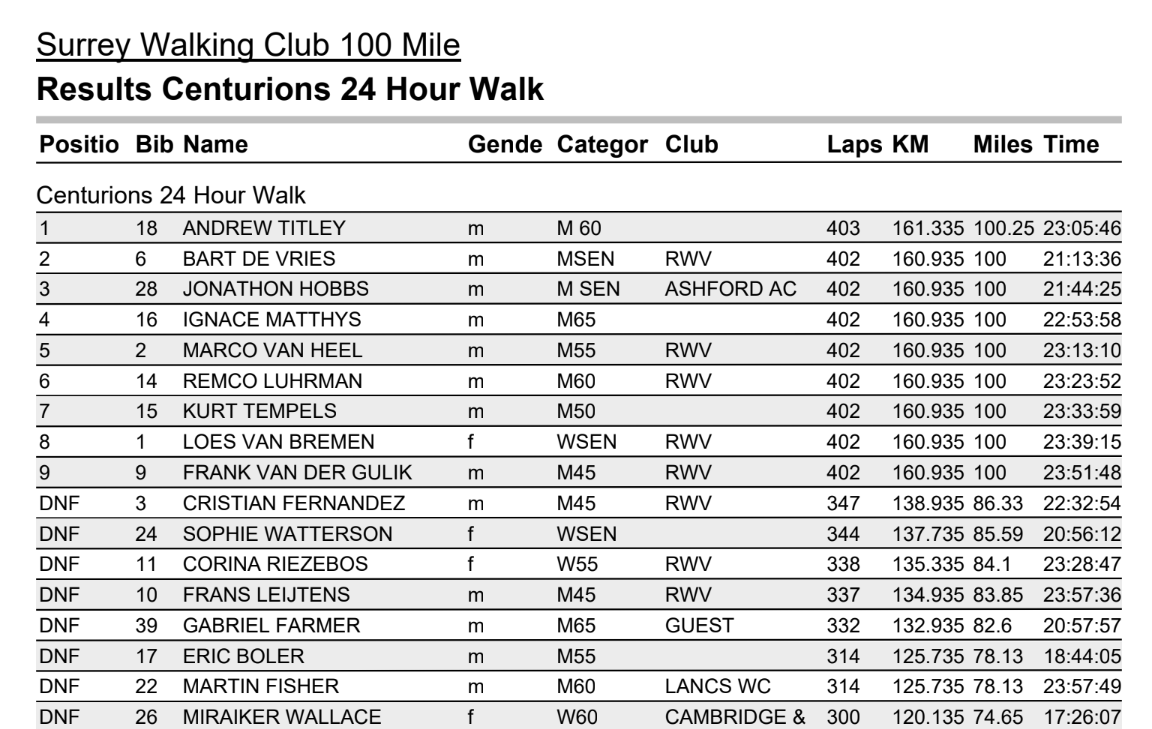
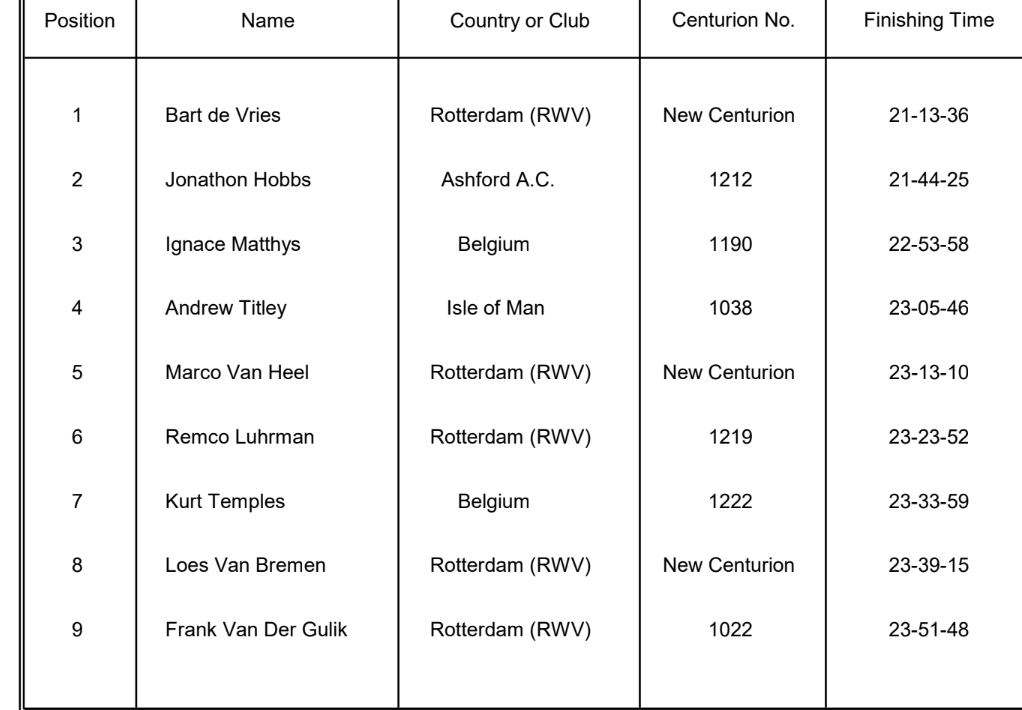
Attached are results for the 100 miles and also the relay.
The Commemorative Relay Challenge attracted nearly 60 participants including 24 Centurions as part of the Centurions team, plus a further 2 representing their clubs.
Teams from the Centurions, Surrey Walking Club, Steyning AC and Tonbridge AC all completed the 100 lap relay, with teams from RWA/ Lewes, RWV and an open team completing almost another 50 laps between them. Some Centurions went on to do further laps as part of their club team.
Bart de Vries, the victorLoes van Bremen, an outstanding debutante points to the camera!
List of Centurions, who participated in the Commemorative Relay challenge
Chris Bolton C332, John Lees C488, Jack Rose C517, Dave Ainsworth C540, Charlie Bean C555, Tony Perkins C685, Roger Michell C724, Sandra Brown 735, Richard Brown C760, Steve Till C768, Carol Killick C793, Phil Carroll C794, Chris Flint C849, Colin Bradley C853, Janette Bean C875, Ron Wallwork C893, Parminder Bhatti C909, Gijs den Ouden C911, Kevin Perry C912, Chris Cattano C963, Dave Jones C987, Kim Howard C1020, Ian Richards C1064, Steve Kemp C1075, Steve Allen C1102, John Borgars C1170.
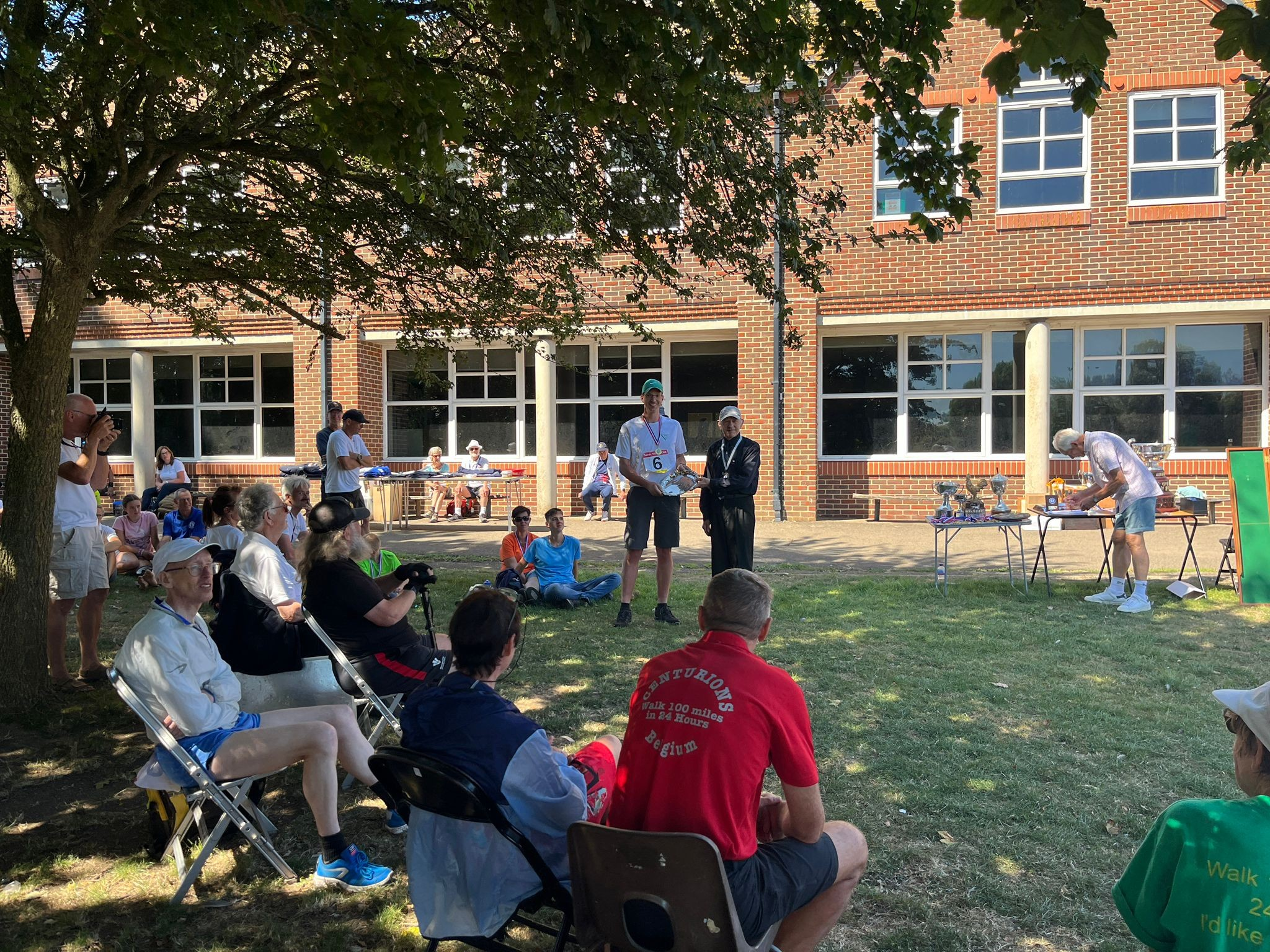
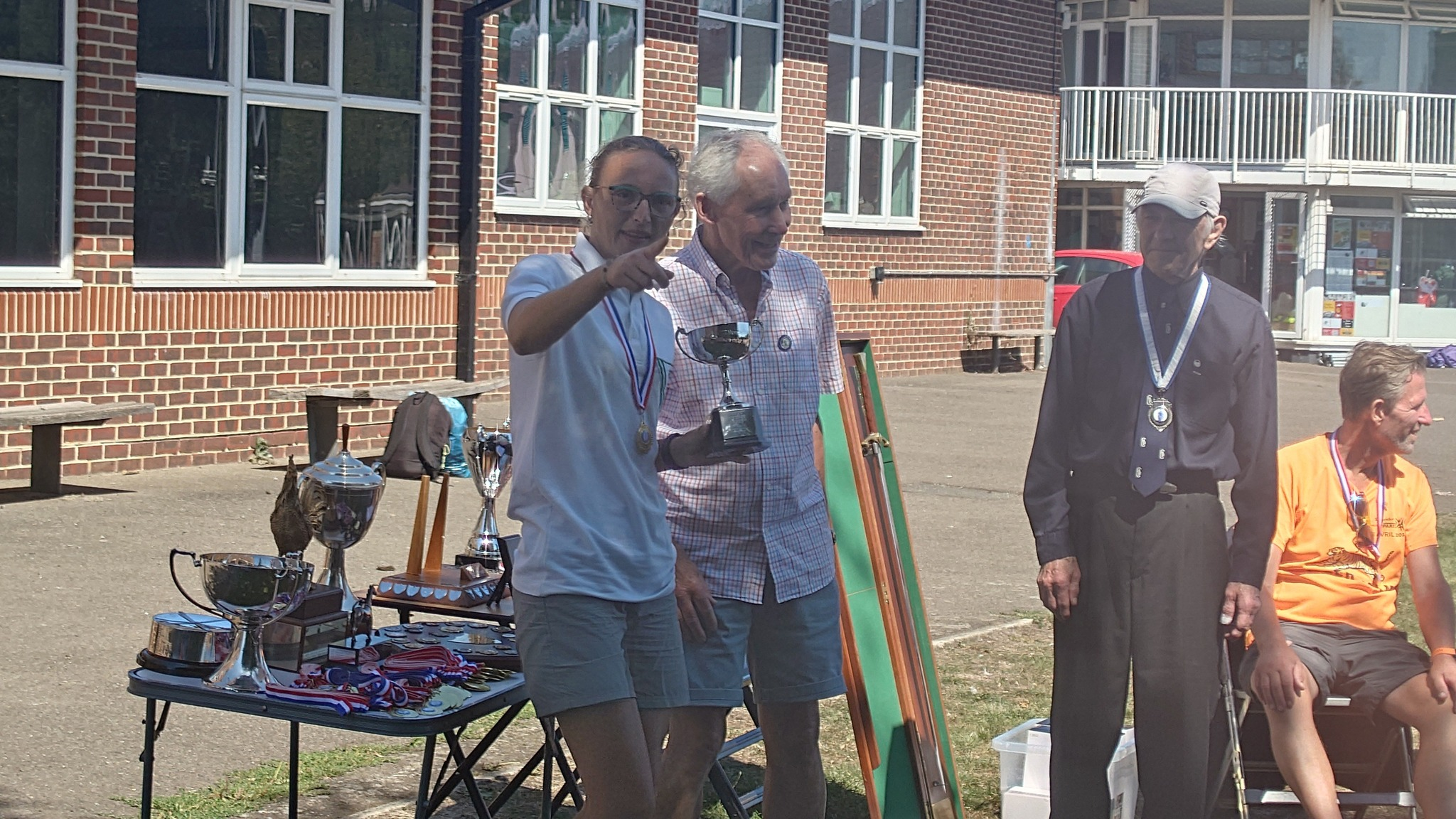
Three new (Dutch) Centurions: Bart de Vries, Centurion 1223 and overall winner, Marco van Heel, Centurion 1224 and Loes van Bremen, Centurion 1225 and fastest lady. Bart won the Hew Neilson Trophy and the Bill King Memorial Trophy, Jonathan Hobbs won the Hammond Trophy, Loes took the Bristol Trophy, the Rotterdamse Wandelsport Vereniging RWV won the Sunday Dispatch Trophy and the Dutch Centurions defeated the British Centurions for the Ko van der Kwaak Cup. Ignace Matthys won the Eddy McNeir Trophy. Frank van de Gulik completed his 19th British 100 miles race, a record he now shares with Gerrit de Jong, Centurion 456. Saturday the weather was ideal, followed by a cold night and a hot Sunday morning. Almost three quarters of all athletes did not finish.
Frans Leijtens with Martin Fisher
From a Lancashire point of view, Chris Bolton, the oldest Centurion present and Ron Wallwork contributed to the Relay, whilst Roy Gunnett and Martin Fisher did themselves proud, given their relative lack of preparation. We hope a future post will contain their personal memories of the grand day.
Beaming in brotherhood, Roy Gunnett and Martin Fisher
A couple of comments from Facebook to close but, all being well, more to come.
Richard Brown – Thanks to everyone for a wonderful celebration of the Centurions 100th 100 mile event. The relay was so inclusive as young and not so young all joined in. Thanks especially to Peter Selby for your magnificent organisation . What fun and memories we all shared.
Sophie Watterson-Jones – I just wanted to say how lovely it was to see the walking community come together and support one another!! Thanks especially to the Dutch crew who were absolutely superb ❤️ lovely to meet you all and hope everyone is recovering well!
Special thanks to Frans Leijtens and Veronica Leijtens for the photos and their incredible commitment to the Centurion tradition.
With this great event looming in just a few days it is timely to pay tribute to two Centurions with Northern, even Lancashire connections.
Paul Briggs 25th March 1943 – 26th August 2023
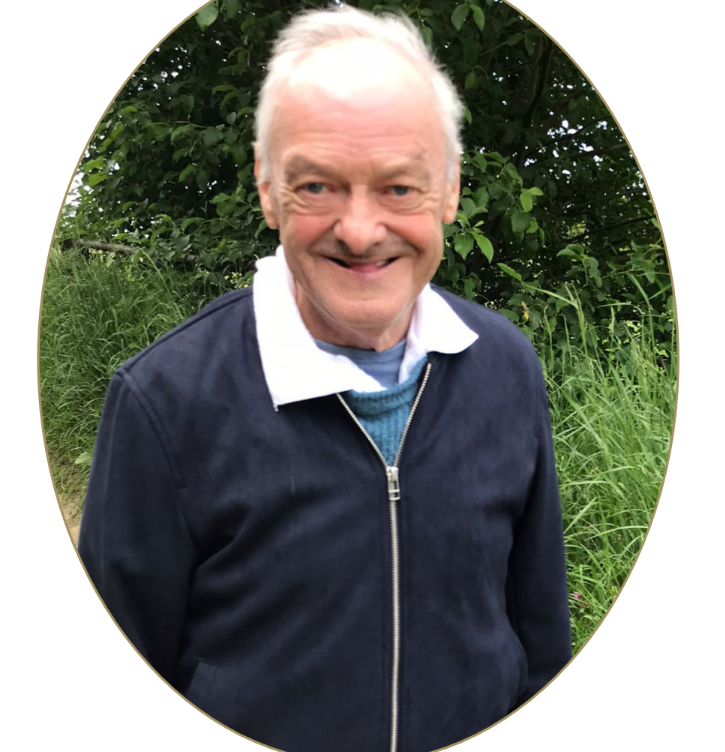
I must confess to being shocked to discover that Paul, Yorkshire Race Walking Club coursing through his veins, had died almost two years ago.
Indeed, ironically, I found out through Dave Ainsworth, the editor of Essex Walker, who was seeking to confirm if Paul, one of our sport’s great characters, had in fact passed away. Finding this to be the case and having been in touch with Mazhar Ellahi, the executor of Paul’s will, Dave,C540, penned this obituary.
CENTURION 431 PAUL BRIGGS
Although hailing from the north he made several appearances down south and relished the challenge of a London-to-Brighton walk, in which he had the kudos of being a sub-10 hours finisher. Paul qualified in the 1969 Leicester 24 Hours’ track race (won by the late Colin Young). Paul reached 101 miles 888 yards in 24 hours, passing 100 miles in 22:24.50. The drama didn’t quite end there as, both C430 Paul Sargent (a former Centurions Hon.Treasurer whose son M.Sargent is C542) & 431 Paul Briggs had been awarded wrong badges, as they’d been allocated in the order names appeared on a final result sheet. Not until 1997 when the Watts’ brothers researched facts for their 1997 Centurions Handbook was it discovered that although P.Sargent finished ahead of P.Briggs at 24 hours, going back through lap scoring sheets it was realised Mr. Briggs was ahead of Mr.Sargent when passing 100 miles. In view of time elapsed (1969-to-1997) it was decided each would retain their badges as originally presented. An fuller explanation of these circumstances and eventual outcome is on Page 74 of The Centurions 1997 Handbook; and also on Page 77 of a 2011 Centurions Handbook. Paul attended The Centurions AGM when in Leeds. In a 1974 Leicester-to-Skegness 100 miles Paul competed without an attendant – at about 5.15am in the “middle of nowhere” going through Lincolnshire, Hon.Ed. overtook Paul, who was suffering badly in the cold and almost at a stop – even in August it can get cold during night times. Hon.Ed. removed his track suit bottoms and handed them to Paul. He donned them and it helped get warmth back into his legs and got him going again, to finish about half-and-hour behind the garment’s owner! Race referee Bill Bell RIP had permitted tracksuit bottoms to be worn during the night. His death is a late notification of a lovely man who really loved his race walking with Yorkshire WC. Paul Briggs R.I.P.
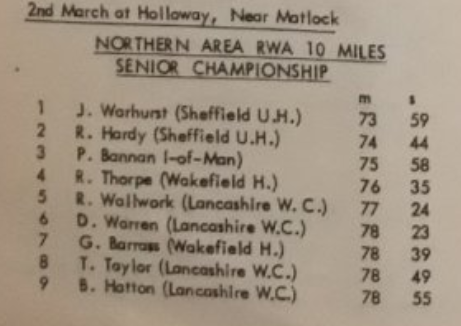
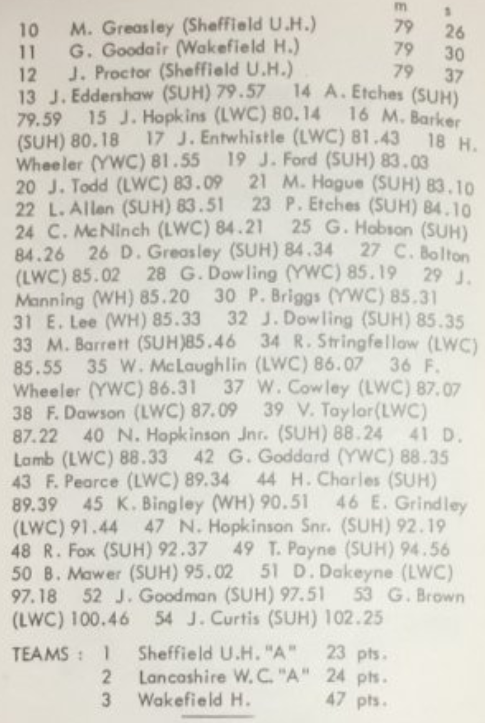
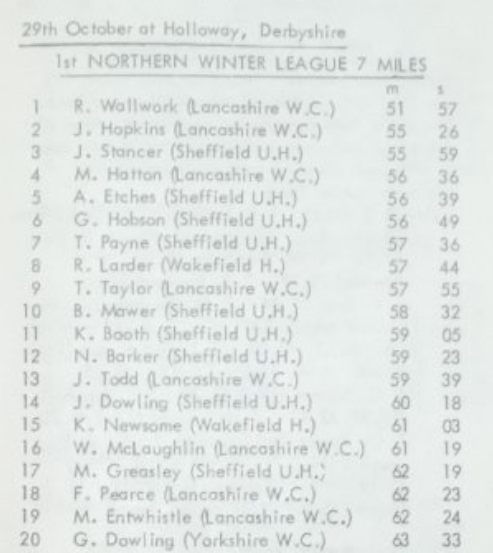
Thinking about Paul, I venture our paths first crossed in March 1968 at the Northern Senior 10 miles championship held in the village of Holloway, near Matlock. Both of us were privileged to be on the same road as the legendary Roland Hardy of Sheffield United Harriers in the twilight of his momentous career. He finished second to the rising star, Jake Warhurst. I managed to make the top ten and Paul was 30th.
From thence on, whenever we met, he was the first to inquire about how things were going and always the bearer of encouragement. Later in 1968 at the end of June I began to repay his concern with sponge and drinks in hand as he took on the challenge of the Manchester- Blackpool race. It was the first of the many times I sought to support Paul’s efforts. His style was distinctive as was his wardrobe, his head often adorned with his favourite Legionnaire’s neck guard. In this particular contest he finished just behind our very own Chris Bolton.
He was a gentle soul, the salt of the earth, highly regarded by everyone in the sport from north to south. It was a privilege to have known him and to feel he was a friend.
Chris Bolton – Paul was certainly a lovely man and a stalwart of YWC. I’m sorry I don’t have any photos, only memories.
I was aware of the numbers mix up, I was at the Leicester track walk as a helper.
It is amazing that Paul carried on for twenty four hours after passing 100 miles He must have been knackered since the last one and a half miles took him over one and a half hours. I’m afraid I have no memory of that since I was looking after John Grayson of Wakefield who was also struggling to keep moving.
Guy Goodair – He was a great unsung hero of our sport
CENTURION 899 IAN GARMSTON
The story of Ian’s departure to ‘pastures new’ is taken once again from the Essex Walker and the pen of Dave Ainsworth. Thanks as ever.
This magical photo shows Ian and Ron Wallwork about to add the Manchester-Blackpool race to their preparations for the 1992 Leicester 100 miles.
We identified the official RWA Manchester to Blackpool walk as a useful fifty miler. Aiming for less than 12 hours on our feet. I cannot remember my time. It doesn’t matter. What I do remember is catching sight of Blackpool Tower as a feature the size of my thumb on the horizon. A number of hours later, I was walking along the prom to the finish. Still being careful to keep my leading leg straight, and watching for lurking judges, but certain I was now having a go at this Centurion thingy, come what may. It was probably during the evening, as we all enjoyed fish and chips, gazing at the sea, that I told Ron I would be joining him. Training then became far more focussed as the months rolled closer to the main event.
It’s well worth reading afresh or for the first time, Ian’s eloquent memory.
Looking ahead to this weekend at Lewes our club will be represented by Martin Fisher, C788 and Roy Gunnett. Martin is something of a legend, having completed at least 30 Hundreds! Roy will not be short of advice! In attendance and support will be Chris Bolton, C332, achieved in 1962.
Martin C788 with Chris Flint C849
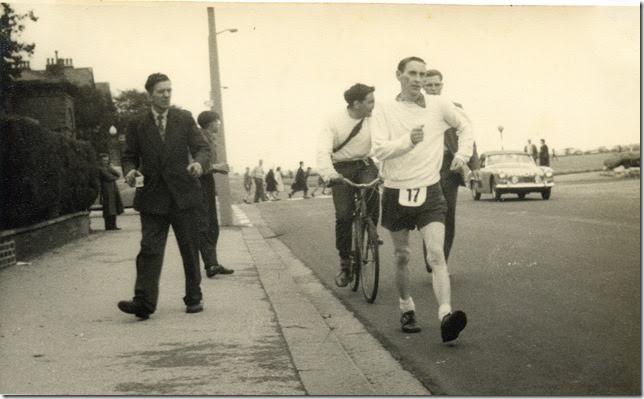
Chris C332, no.17 on the prom finishing the Blackpool – I’m standing on the pavement, John Todd on the bike with Maurice Ireland on the road behind Chris. I suspect this is 1962.
BEST WISHES FROM THE CLUB TO ALL THE COMPETITORS, NOT LEAST MARTIN AND ROY
The scene was set for a battle between specialists on a very testing course giving the endurance walker an edge on the uphills and the “sprinter” the advantage on the downhills. Tony Bell regularly fills either winner or runner up spot in club races and this was no different , however, Martin Payne also has flat speed but in recent times has concentrated on marathon plus distances. At the 1 mile checkpoint Tony had the initiative but Martin was clearly just sitting in.
Martin focused despite the beauty of the settingRoy adding a few miles before the Hundred!
Roy Gunnett was in the bronze position and most of the remaining walkers all within sight of each other. At halfway (5k)the eventual winner had stretched his lead to 13 seconds with some slope assisting terrain still to negotiate.
Joe with a smile on his face or is it a grimace?
Rain was forecast for the race time but it never really appeared. Most aspirants achieved a faster second half.
Phil showing good form
RESULTS Scratch
Tony Bell 68:43(11:11/34:36)
Martin Payne 69:23(11:13/34:49)
Roy Gunnett 75:54(11:33/37:52)
Phil McCullagh 76:06(12:23/38:57)
Joe Hardy 78:23(12:22/39:57)
Pat Evans 79:02(12:48/40:18)
Greg Smith 87:32(13:10/44:45)
Andrea Lennon 49:05(14:27) raced 5k
Handicap
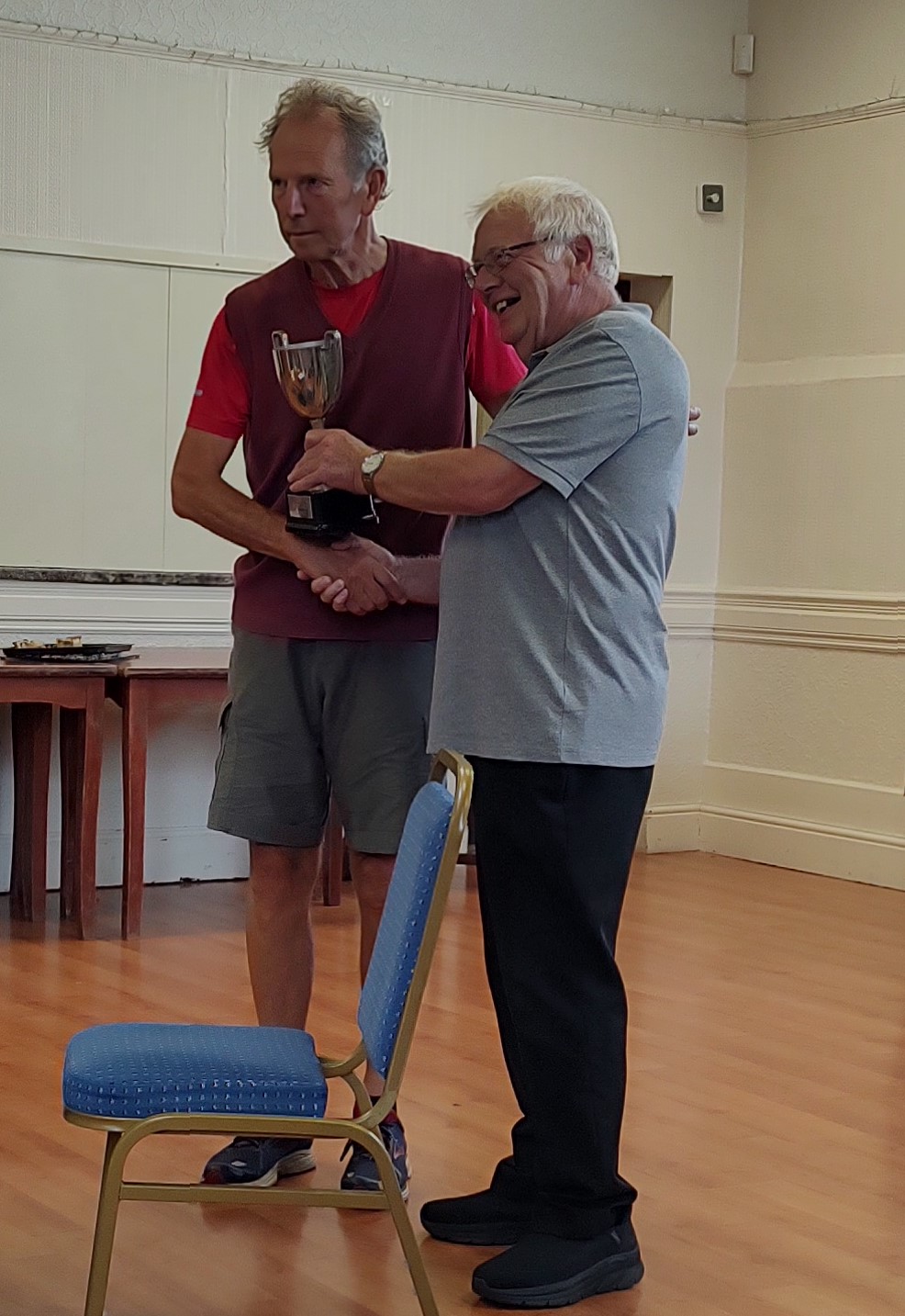
A lovely photo of two smiling race walkers as Roy receives the Goodwin Trophy
Roy Gunnett 63:09
Phil McCullagh 63:36
Joe Hardy 65:23
Pat Evans 65:32
Martin Payne 66:52
Tony Bell 67:08
Greg Smith 75:47
Andrea Lennon
Age-graded
Pat continues to dominate the age-graded categoryMust be something in the Chorley air, Andrea is smiling too!
Pat Evans 79.42%
Joe Hardy 76.99%
Roy Gunnett 74.64%
Andrea Lennon 72.56%
Martin Payne 69:18%
Tony Bell 67.69%
Phil McCullagh 65.22%
Greg Smith 60:52%
Finally thanks to Sailash Shah who policed the race headquarters while we were away enabling the race to be run(walked)to timetable.
Gratitude as ever to Greg Smith for the photos with his apology that there is not one of Tony Bell, who was too quick for the camera.
On Saturday, August 9th it is confirmed that the Goodwin Cup 10 kilometres will take place from the St Peter’s Church Hall in Chorley. Eric Crompton will open up by noon. As usual the race will start at 1.00 am and you are encouraged to let Dave Evans know if you are attending and in what capacity.
With grateful thanks to the Essex Walker and Dave Ainsworth, taken from edition 454, August-September 2025
MORE FROM A TALENTED FILM MAKER
This is almost as good as being there. Another film from Len Ruddock:
The 2025 European Athletics Race Walking Team Championship at Podebrady.
“Good viewing and all comments welcomed.
Putting it together was a useful aide memoire to my observation report, as previously published in Essex Walker, so thanks for that.
I hope it can be used, in certain areas, by coaches to help interpret today’s view of the rules governing our sport of Race Walking.
And as an aside, it begs the question, is it time to revise the laws?”
Len Ruddock
Below is Len’s written report, which appeared in Essex Walker 453.
FROM OUR MAN AT THE BIG PODEBRADY MEET
These are my personal impressions of the event. This was the first major RW event that I had been to since the 50km at the London Olympics. It was a good opportunity to view closely the current state of play, healthy or otherwise, of our sport of Race Walking. The venue was the beautifully laid out Collonade city park of this long-established Bohemian spa town. The 1km circuit had all the modern gizmos of current major set-ups: big screen, start/finish gantry, Czech and English commentary, good marshalling with barriers plus lots of sponsors. I learnt that the venue was used for a number of events the previous day (Saturday 17th) for running and a masters walk. A good bit of integration and PR there.
Two years ago, Chris Maddocks with Paul Warburton (World Athletics Commentator) and three American RW notables were on a panel discussing the subject heading, ‘How Race Walking Has Changed Through the Decades’ (available on YouTube). Chris made an observation that the perception of ‘Joe Public’ was that they could not detect if a walker was lifting at speeds of 4mins/km as the movement was too fast. However, Chris maintained that the well-trained eye, particularly judges (whom he generally praised), would be able to detect poor walking, even at that pace. With Chris’s quote rattling in my brain, I was genuinely pleasantly surprised of the overall standard of RW and the intervention of the judges where necessary. The only exception, I felt, was the Snr Men’s 20km and especially over the latter stages of the race. I obtained the official printed results of all the races, bar the men’s 20km (I had to dash for my train) and included are all the red cards given out per competitor. It makes interesting reading, as it shows that the judges didn’t hold back issuing cards even for the big names. I also noticed that the soles of the predominantly worn footwear, were a lot thicker than I can remember and some brands appeared ‘spongy’, not providing a solid rigid base to execute the next stride properly. For what it’s worth, I thought as a group, the women in the 35km gave the best demonstration of solid race walking.
To wrap up, my own conclusion, is that RW is thriving outside of these shores. For example, Ireland had 4 men and 2 women starting across the events. Italy, Spain and France dominated results-wise but even Ukraine had the winner in the women’s 20km, Lyudmila Olyanovskaya in 1:27:56, 9 seconds ahead of Clémence Beretta of France. It was an enjoyable, engaging race day, an event for everyone to enjoy and I hope to get along to some of these World Athletics’ organised events in future and my message to those who sit on the fence or have written off RW is, why not get along to one of these and see for yourself?
Len Ruddock
The Essex Walker under the watchful and knowledgeable eye of Dave Ainsworth goes from strength to strength, full of absorbing contemporary and historical material. Subscribe by contacting Dave at dave_ainsworth@yahoo.co.uk
So many people involved in race walking now in the north east and west, I can’t thank their enthusiasm enough. So many more race opportunities, more clubs and as a result more athletes. Athletics has an event for everyone! Delighted to see this paying off.
The Barnard trophy 10k takes place in the sleepy village of Sutton, a suburb of Macclesfield. Journeying there is usually quite straightforward unless you find out on route that there is a massive musical festival, the Hide and Seek, in your way. Quite a number of club members were delayed while music lovers disgorged from their transport and ambled across local fields and lanes oblivious of the impending club race.
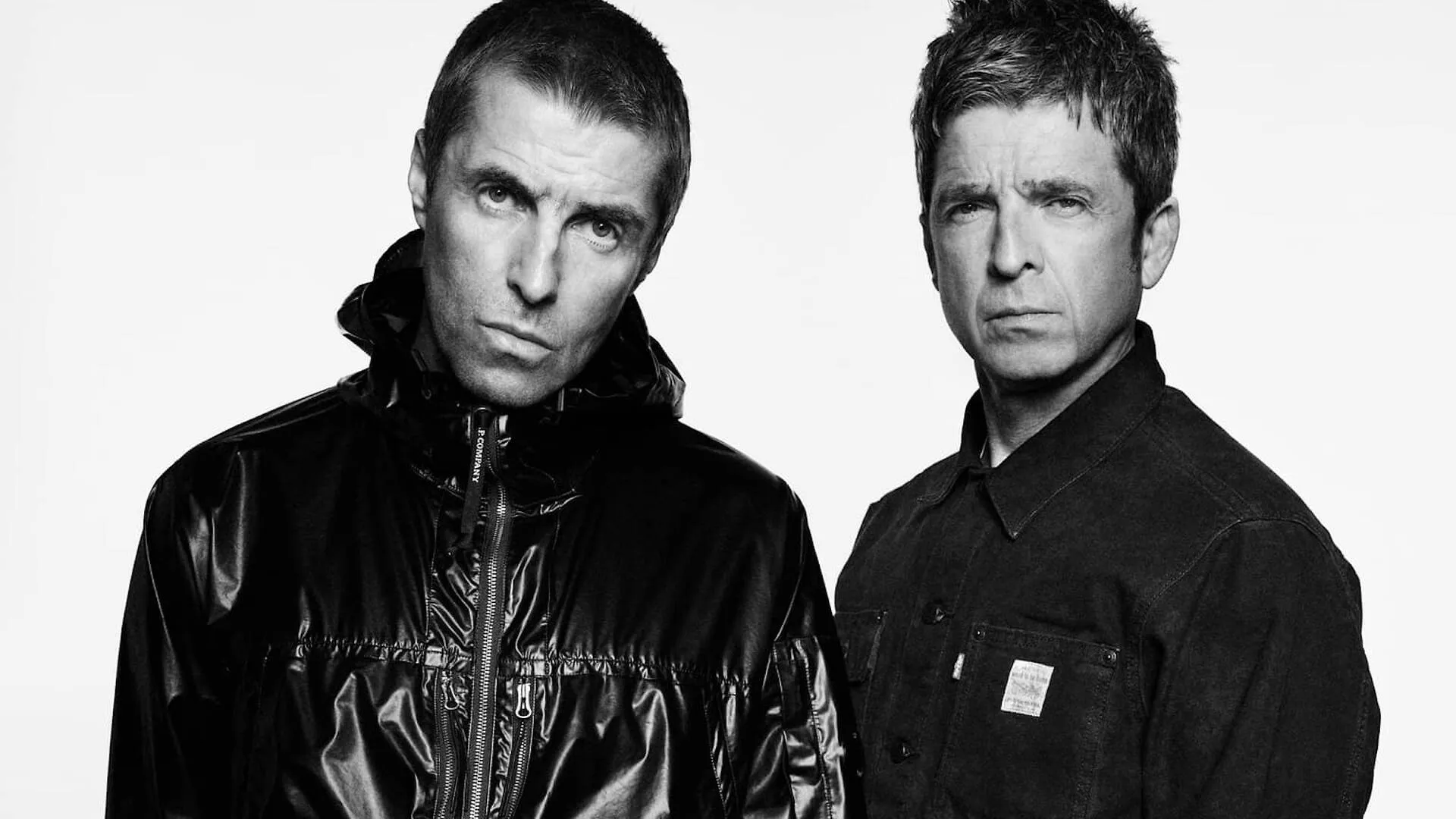
The Bros looking mean! Ta to Oasis/Facebook
While this was totally unpredicted our Fred Pearce relay, scheduled for late July, had to be rescheduled as the infamous OASIS were due to play in Heaton Park on the very same day. We decided not to confront the Gallagher brothers about changing their date!
The Barnard trophy saw 8 aspirants toeing the starting line under the watchful eye of Chris Harvey and Sailash Shah at the start and Glyn Jones at the turnaround, a mile away. Mixed fortunes across the board with a few “out of character” performances.
Nigel Shaw driving on
Nigel Shaw is fast becoming a regular winner of our events and having sat on the tail of Ken Connor for 2 of the 3 laps recouped a 20 second deficit on the third out and back and added another 1 minute 24 secs, all in a very stylish manner.
Adrian strolling home
Roy holding off a fast-finishing JoeSteve, the surprise packet in the race
Adrian Edwards had a quiet day and clearly did not race but continues to show why he is such an excellent example of race walking technique. Roy Gunnett had a bit of an off day and Steve Wilde rose to the occasion moving through to fourth in the open race.
SCRATCH
Nigel Shaw 64:11(21:28/42:45)
Ken Connor 65:35(21:26/42:25)
Adrian Edwards 71:15(23:10/43:38)
Steve Wilde 73:38(24:15/48:48)
Roy Gunnett 75:54(24:45/50:27)
Joe Hardy 76:03(25:51/51:31)
Phil McCullagh 76:45(26:01/51:31)
Pat Evans 77:05(25:55/51:39)
A jubilant Pat
HANDICAP
Steve wins the coveted Barnard Trophy
Steve Wilde 61:18
Pat Evans 62:45
Nigel Shaw 64:11
Joe Hardy 64:23
Ken Connor 65:35
Phil McCullagh 65:50
Roy Gunnett 67:29
Adrian Edwards 69:25
Pat maturing like a fine wine takes the age-graded lead
AGE-GRADED
Pat Evans 81.13%
Joe Hardy 79.36%
Roy Gunnett 74.64%
Nigel Shaw 73.23%
Ken Connor 70.93%
Steve Wilde 69,90%
Adrian Edwards 65.96%
Phil McCullagh 64.57%
Thanks to Chris Harvey for the photos and Greg Smith for the editing.
A REMINDER
Adrian Edwards informs:
As Fred’s relay has been postponed we are going to meet up on the track in Stockport on Sunday, July 27th.
It will give anyone thinking of doing the 100 miles a chance to do 5 hours around the track, from 12 noon until 5. Just 3 weeks before the big event. All welcome.
Nigel Shaw completed the Northwich 10 km in just over 65 mins in very humid conditions and a quite severe course on road and park. Walking in with excellent technique beating a least 1/2 the field.
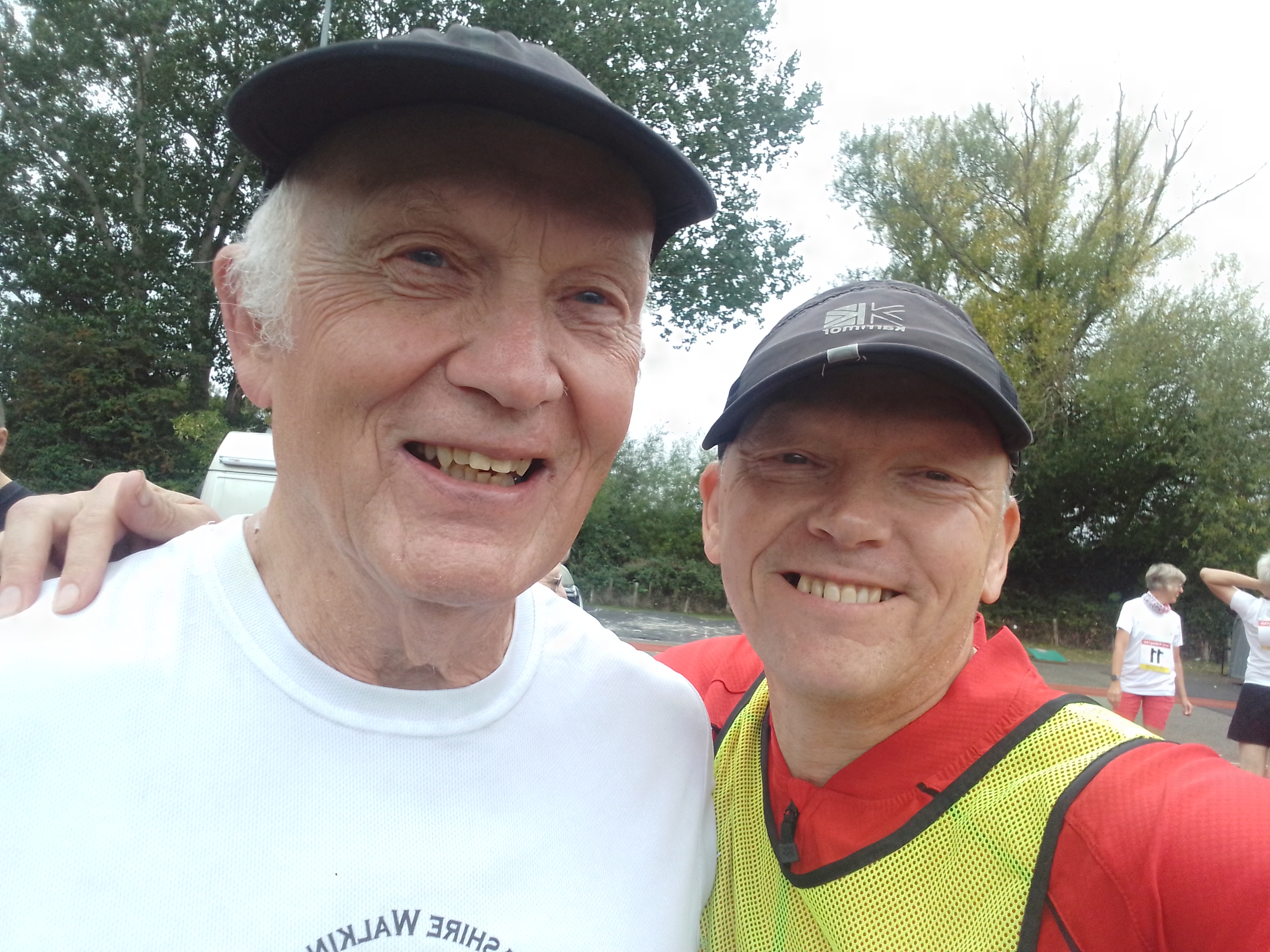
For me the above event is poignant as it was the last time my dad, Alf and I raced together in the colours of our club.
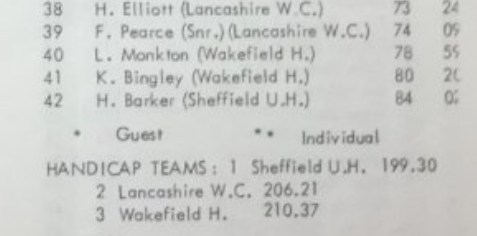
Hidden away here in 14th position is John Warhurst of Sheffield UH, who was to progress to being one of the sports’ great all-rounders. I think this might have been his debut in an open race.
Chris Bolton comments on the results below:
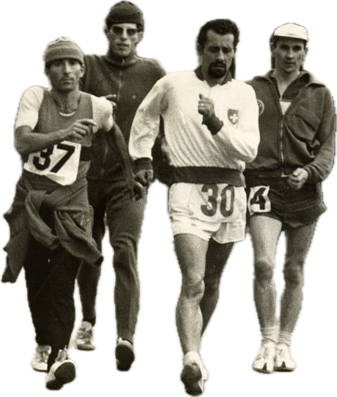
On 24th October in a 10.5Km in Lugano you will find Guy Goodair and myself and on 30th October again Guy and myself in the 100km won by Colin Young. Colin was very popular in Lugano, especially when at the presentation he thanked the organisers in Italian.
Chris notes:
Above is a picture taken early in the 100Km.
Next to me is Georgia Poretti, the Swiss champion and three Italians. None of them reached the finish – it was tough.
STOP PRESS
Adrian Edwards informs:
As Fred’s relay has been postponed we are going to meet up on the track in Stockport on Sunday, July 27th.
It will give anyone thinking of doing the 100 miles a chance to do 5 hours around the track, from 12 noon until 5. Just 3 weeks before the big event. All welcome.
Our next club race is the Barnard Trophy 10 kilometres to be held on Saturday, July 5th in Sutton Macclesfield, starting at 1.00 p.m. As is now usual it would be really helpful if you could let Dave Evans know if you are attending and in what capacity. It also helps Marshall with the refreshments.
Last weekend saw the biggest participation event on the Isle of Man, the 85 miles Parish Walk. It’s a heart-warming display of guts and camaraderie. I was hoping to post some great videos of the race in progress, which capture beautifully the relationship between participants, attendants and supporters along the course. However, at this moment, these are not available.
However, here is a clip of the engaging post-race interview with Callum Gawne, the proud winner. I wonder if Callum is related to the Haydn Gawne, who I raced against in the mid-1960s.
The photo was taken by our very own Guy Goodair, almost 60 years ago!!
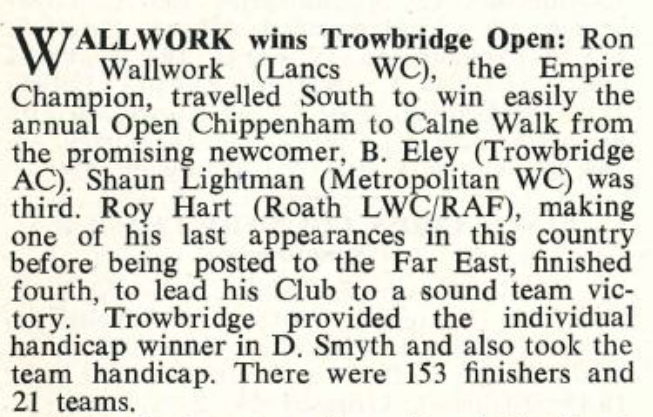
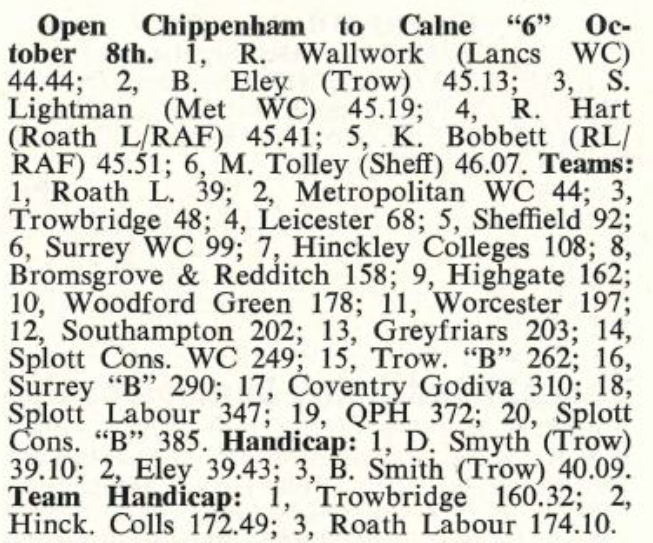
By chance, on the same page of results, we find the following.
Whilst Ron was still very much flying the Lancashire flag on his own, it’s sobering to recognise how far he travelled from Bolton to Trowbridge to compete. And, back then, it was a bloody long way!
On Friday June 6, I flew to Eindhoven from Manchester uneventfully, in contrast to David Hoben who had taken the Eurostar from London only to be greeted in the Netherlands with an unexpected rail strike. Not to be deterred, David caught a taxi, at some expense, to his hotel in Eindhoven.
We woke up to rain on Saturday and made our way to the athletic stadium, a short walk away from the centre of Eindhoven..
The Dutch organisers were as friendly and helpful as ever. They had provided various events: 100 mile/24 hr ( 36 entrants ), 100K ( 2 ), 50 mile (31) and 50K (11).
Both David and I had entered for the 50K. Last year in Schiedam I had experienced an episode of ventricular tachycardia during the last 2 laps of the 50 mile event which ended my race. This year I thought a shorter distance might be more appropriate with a better chance of remaining vertical throughout.
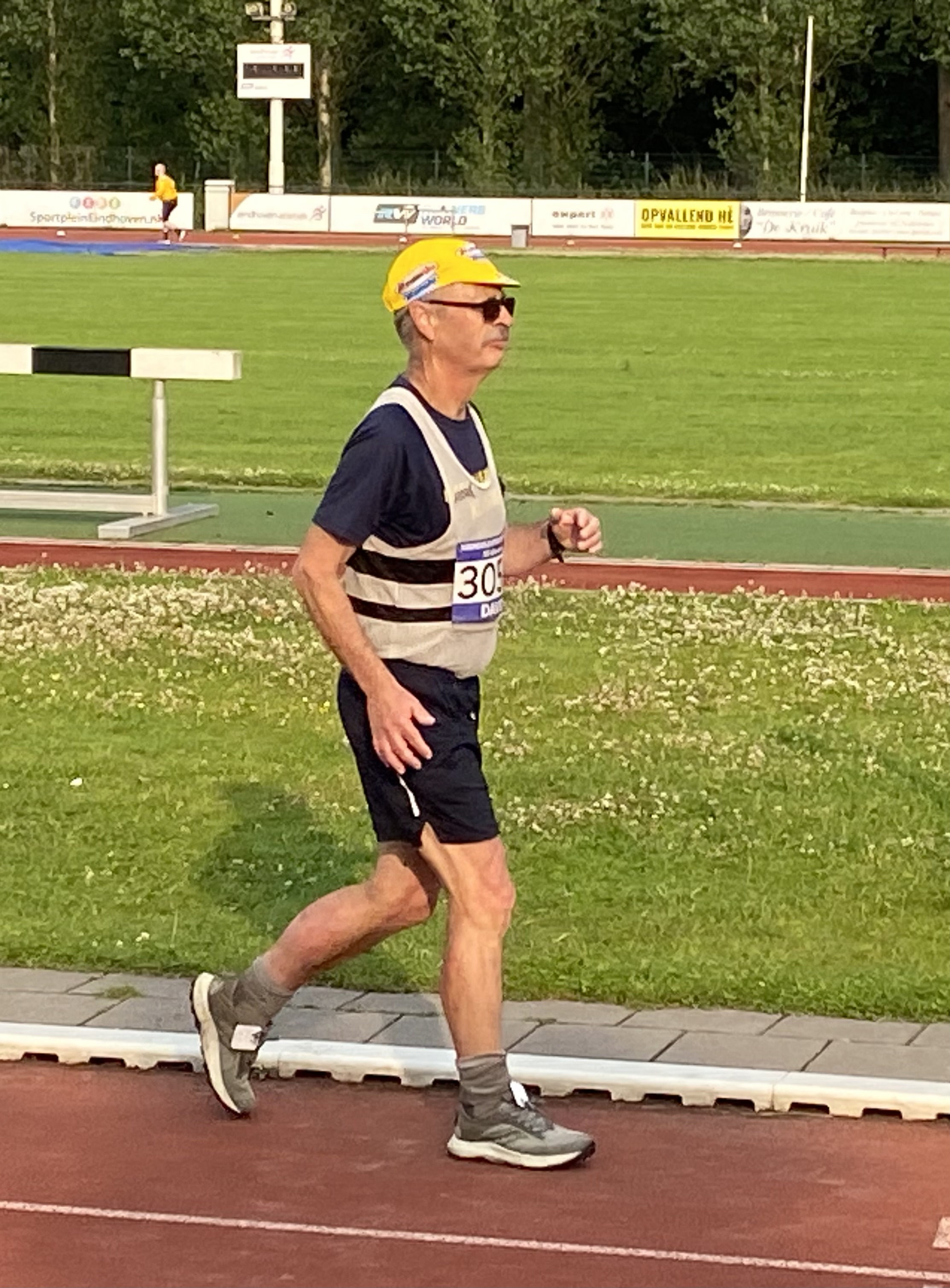
David – a picture of determination
We set off at the same time (12 noon) as the heroic 100 milers, and our mission was to complete 15 2 mile circuits on a paved area adjacent to a few roads around the stadium in quite a peaceful location, after having first done 3 or 4 laps of the track itself to make up the exact distance.
David still in control
At the end of each lap we re-entered the athletic stadium and took advantage of a plentiful supply of snacks and drinks as we passed the support tent. There was some intermittent drizzle and then a thorough soaking during 1 lap which brought back damp memories of the 100 miler in Middlesbrough a while ago (Adrian and myself won’t forget that in a hurry ).
Martin receives his second place certificateHeartiest congratulations
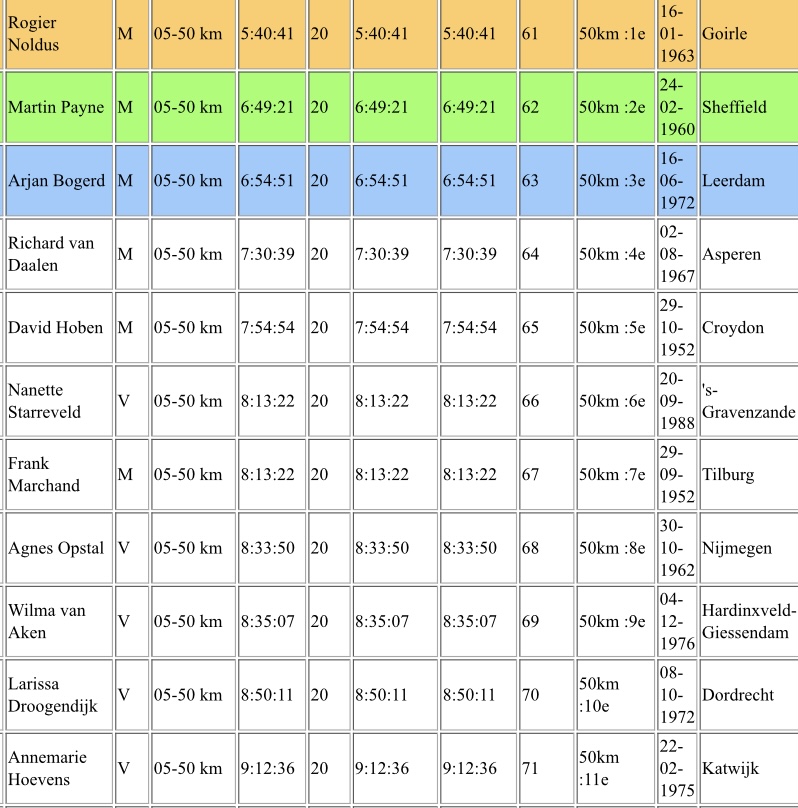
Given the conditions, we were happy with our finishing times and I was particularly pleased to get 2nd place and feel normal throughout. I would have needed a moped to catch the winner who finished with sufficient time to have a good hot shower and eat some dinner before sauntering back to greet my finish!
Screenshot
I gather that David had a better return journey whilst my return to Blighty was delayed whilst they waited for a new part for the plane which had to be flown in from Dublin in the afternoon. All in all though, a great weekend and I can thoroughly recommend taking part in one of the annual Dutch events. If anyone is interested I’d be very happy to provide more information.
Heartiest congratulations to Martin and David for flying the flag in the home of long-distance walking.
































 Lancashire Walking Club : Health The First Wealth