
Back in the Autumn the issue of whether our club events required a Race Walking Association race permit came to the surface. Unknowingly I contributed to the discussion gathering pace as my effort to get the AGM 5k result on to the Power of Ten web site faltered for lack of a race permit number.
To cut a long story short it is now clear that our events do require a race permit to ensure that we are fully insured. In fact the RWA permit fee of £3 per event provides public liability cover to the tune of £45 million. Inevitably though this cover comes with a number of caveats, all of which are pretty much common-sense.
The application form asks the following:
- that courses are measured accurately, but no certificate is required unless the race is a championship.
- that the local authority is informed, most easily achieved by e-mailing the police.
- that First Aid support is at hand through a certificated person. We need to check with our membership,who might be qualified in this respect. However Glyn Jones informs us that
Under UKA guidance rules, if an event has less than 50 athletes, and a hospital is within reasonable distance, then first aid cover is not a requirement (entirely up to the organisers) and insurance is still covered. - that a risk assessment of each course has been carried out. In essence this means walking the course with two principal questions in mind – ‘What are the hazards?’ and ‘How will we minimise the risks involved?’ In our case the main responses are likely to revolve around marshalling and signage. A simple record needs to be kept of steps taken.
As I understand the situation there is no requirement for ‘qualified’ officials. In addition novices and unregistered athletes are covered by the permit.
In terms of the costs to our members they would not need to pay the extra 50p individual levy on the day as our races are defined as ‘closed’. Guest walkers, still warmly welcomed, would be asked to make a recorded donation as opposed to paying an entry fee.
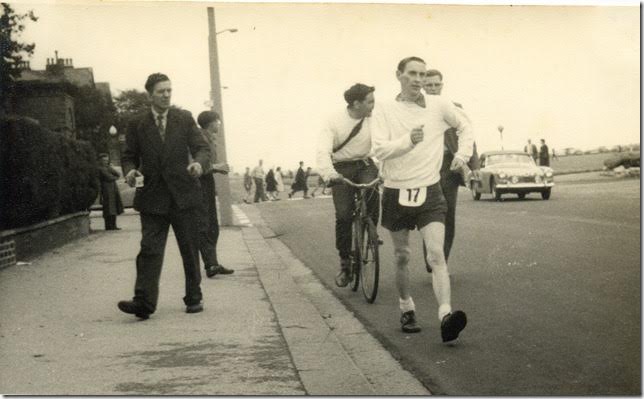
Having spent most of my working life at odds with bureaucracy I can’t for the life of me see these requirements as bureaucratic. Indeed in the early 1970’s as the club secretary I organised a number of Manchester-Blackpool races and sorting out all of the above was par for the course, involving a day off work on the Friday to drive slowly to Blackpool, putting up numerous direction signs, never mind checking for unexpected road works! Even if in those days we didn’t call this necessary caution ‘risk assessment’ and the St John’s Ambulance were always willing to help out popping a few blisters!
Obviously the most demanding requirement relates to the risk assessment element, particularly as this will underline the need for non-competitors to help on the day. It would be useful to begin compiling a list of members/supporters willing to take on tasks, such as marshalling. More than ever it means stressing that even if a member is injured and unable to race, their presence on a race day would be invaluable.
In terms of assessing our present portfolio of courses we should discuss how we can share out the responsibilities. As a contribution I’m happy to get there early next Saturday to do an immediate assessment of the Simister out-and-back and I could scrutinise the Sutton Macclesfield circuit in the week before the first race there on April 9th.
With the dust settling my own opinion is that we should respond positively to the need to meet the requirements posed by the necessity of the race permit. And, I’m sure, we can do this without burdening Fred with yet more pressure, especially given his duties as National President.